REST 101 For Developers

rest-easy

Local Code Execution

Functions in high-level languages like C are compiled into procedures in assembly. They add a level of indirection that frees us from having to think about memory addresses.

Methods and polymorphism in object-oriented languages like Java add another level of indirection that frees us from having to think about the specific variant of a set of similar functions.

Despite these indirections, methods are basically still procedure calls, telling the computer to switch execution flow from one memory location to another. All of this happens in the same process running on the same computer.

Remote Code Execution

This is fundamentally different from switching execution to another process or another computer. Especially the latter is very different, as the other computer may not even have the same operating system through which programs access memory.

It is therefore no surprise that mechanisms of remote code execution that try to hide this difference as much as possible, like RMI or SOAP, have largely failed. Such technologies employ what is known as Remote Procedure Calls (RPCs).
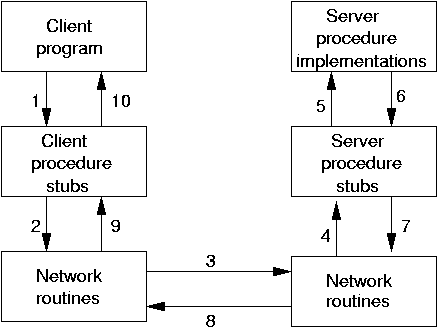
rpcOne reason we must distinguish between local and remote procedure calls is that RPCs are a lot slower.

For most practical applications, this changes the nature of the calls you make: you’ll want to make less remote calls that are more coarsely grained.

Another reason is more organizational than technical in nature.

When the code you’re calling lives in another process on another computer, chances are that the other process is written and deployed by someone else. For the two pieces of code to cooperate well, some form of coordination is required. That’s the price we pay for coupling.

Coordinating Change With Interfaces

We can also see this problem in a single process, for instance when code is deployed in different jar files. If you upgrade a third party jar file that your code depends on, you may need to change your code to keep everything working.

Such coordination is annoying. It would be much nicer if we could simply deploy the latest security patch of that jar without having to worry about breaking our code. Fortunately, we can if we’re careful.

interfaceInterfaces in languages like Java separate the public and private parts of code.

The public part is what clients depend on, so you must evolve interfaces in careful ways to avoid breaking clients.

The private part, in contrast, can be changed at will.

From Interfaces to Services

In OSGi, interfaces are the basis for what are called micro-services. By publishing services in a registry, we can remove the need for clients to know what object implements a given interface. In other words, clients can discover the identity of the object that provides the service. The service registry becomes our entry point for accessing functionality.

There is a reason these interfaces are referred to as micro-services: they are miniature versions of the services that make up a Service Oriented Architecture (SOA).

A straightforward extrapolation of micro-services to “SOA services” leads to RPC-style implementations, for instance with SOAP. However, we’ve established earlier that RPCs are not the best way to invoke remote code.

Enter REST.

RESTful Services

rest-easyRepresentational State Transfer (REST) is an architectural style that brings the advantages of the Web to the world of programs.

There is no denying the scalability of the Web, so this is an interesting angle.

Instead of explaining REST as it’s usually done by exploring its architectural constraints, let’s compare it to micro-services.

A well-designed RESTful service has a single entry point, like the micro-services registry. This entry point may take the form of a home resource.

We access the home resource like any other resource: through a representation. A representation is a series of bytes that we need to interpret. The rules for this interpretation are given by the media type.

Most RESTful services these days serve representations based on JSON or XML. The media type of a resource compares to the interface of an object.

Some interfaces contain methods that give us access to other interfaces. Similarly, a representation of a resource may contain hyperlinks to other resources.

Code-Based vs Data-Based Services

soapThe difference between REST and SOAP is now becoming apparent.

In SOAP, like in micro-services, the interface is made up of methods. In other words, it’s code based.

In REST, on the other hand, the interface is made up of code and data. We’ve already seen the data: the representation described by the media type. The code is the uniform interface, which means that it’s the same (uniform) for all resources.

In practice, the uniform interface consists of the HTTP methods GET, POST, PUT, and DELETE.

Since the uniform interface is fixed for all resources, the real juice in any RESTful service is not in the code, but in the data: the media type.

Just as there are rules for evolving a Java interface, there are rules for evolving a media type, for example for XML-based media types. (From this it follows that you can’t use XML Schema validation for XML-based media types.)

Uniform Resource Identifiers

So far I haven’t mentioned Uniform Resource Identifiers (URIs). The documentation of many so-called RESTful services may give you the impression that they are important.

identityHowever, since URIs identify resources, their equivalent in micro-services are the identities of the objects implementing the interfaces.

Hopefully this shows that clients shouldn’t care about URIs. Only the URI of the home resource is important.

The representation of the home resource contains links to other resources. The meaning of those links is indicated by link relations.

Through its understanding of link relations, a client can decide which links it wants to follow and discover their URIs from the representation.

Versions of Services

evolutionAs much as possible, we should follow the rules for evolving media types and not introduce any breaking changes.

However, sometimes that might be unavoidable. We should then create a new version of the service.

Since URIs are not part of the public interface of a RESTful API, they are not the right vehicle for relaying version information. The correct way to indicate major (i.e. non-compatible) versions of an API can be derived by comparison with micro-services.

Whenever a service introduces a breaking change, it should change its interface. In a RESTful API, this means changing the media type. The client can then use content negotiation to request a media type it understands.

What Do You Think?

what-do-you-thinkLiterature explaining how to design and document code-based interfaces is readily available.

This is not the case for data-based interfaces like media types.

With RESTful services becoming ever more popular, that is a gap that needs filling. I’ll get back to this topic in the future.

How do you design your services? How do you document them? Please share your ideas in the comments.

How To Start With Software Security – Part 2

white-hatLast time, I wrote about how an organization can get started with software security.

Today I will look at how to do that as an individual.

From Development To Secure Development

As a developer, I wasn’t always aware of the security implications of my actions.

Now that I’m the Engineering Security Champion for my project, I have to be.

It wasn’t an easy transition. The security field is vast and I keep learning something new almost every day. I read a number of books on security, some of which I reviewed on this site.

As an aspiring software craftsman, I realize that personal efforts are only half the story. The other half is the community of professionals.

Secure Development Communities

I’m lucky to work in a big organization, where such a community already exist.

EMC’s Product Security Office (PSO) provides me with a personal security adviser, maintains a security-related wiki, and operates a space on our internal collaboration environment.

communityIf your organization doesn’t have something like our PSO, you can look elsewhere. (And if it does, you should look outside too!)

OWASP is a great place to start.

They actually have three sub-communities, one of which is for Builders.

But it’s also good to look at the other sub-communities, since they’re all related. Looking at things from the perspective of the others can be quite enlightening.

That’s also why it’s a good idea to attend a security conference, if you can. OWASP holds annual AppSec conferences in three geos. The RSA Conference is another good place to meet your peers.

If you can’t afford to attend a conference, you can always follow the security section of Stack Exchange or watch SecurityTube.

Contributing To The Community

So far I’ve talked about taking in information, but you shouldn’t forget to share your personal experiences as well.

contributeYou may think you know very little yet, but even then it’s valuable to share.

It helps to organize your thoughts, which is crucial when learning and you may find you’ll gain insights from comments that readers leave as well.

More to the point, there are many others out there that are getting started and who would benefit from seeing they are not alone.

Apart from posting to this blog, I also contribute to the EMC Developer Network, where I’m currently writing a series on XML and Security.

There are other ways to contribute as well. You could join or start an OWASP chapter, for instance.

What Do You Think?

How did you get started with software security? How do you keep up with the field? What communities are you part of? Please leave a comment.

How To Start With Software Security

white-hatThe software security field sometimes feels a bit negative.

The focus is on things that went wrong and people are constantly told what not to do.

Build Security In

One often heard piece of advice is that one cannot bolt security on as an afterthought, that it has to be built in.

But how do we do that? I’ve written earlier about two approaches: Cigital’s TouchPoints and Microsoft’s Security Development Lifecycle (SDL).

The Touchpoints are good, but rather high-level and not so actionable for developers starting out with security. The SDL is also good, but rather heavyweight and difficult to adopt for smaller organizations.

The Software Assurance Maturity Model (SAMM)

We need a framework that we can ease into in an iterative manner. It should also provide concrete guidance for developers that don’t necessarily have a lot of background in the security field.

Enter OWASP‘s SAMM:

The Software Assurance Maturity Model (SAMM) is an open framework to help organizations formulate and implement a strategy for software security that is tailored to the specific risks facing the organization.

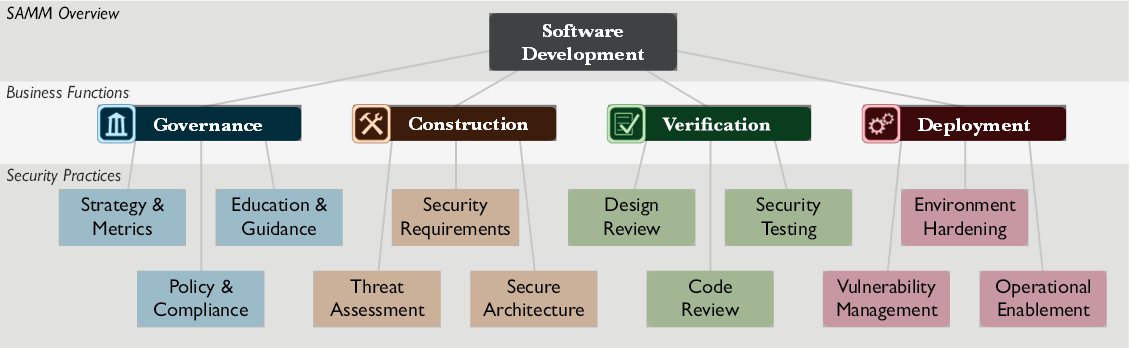
SAMM assumes four business functions in developing software and assigns three security practices to each of those:

opensamm-security-practices

For each practice, three maturity levels are defined, in addition to an implicit Level 0 where the practice isn’t performed at all. Each level has an objective and several activities to meet the objective.

To get a baseline of the current security status, you perform an assessment, which consists of answering questions about each of the practices. The result of an assessment is a scorecard. Comparing scorecards over time gives insight into evolving security capabilities.

With these building blocks in place, you can build a roadmap for improving your capabilities.

A roadmap consists of phases in which certain practices are improved so that they reach a higher level. SAMM even provides roadmap templates for specific types of organizations to get you started quickly.

What Do You Think?

Do you think the SAMM is actionable? Would it help your organization build out a roadmap for improving its security capabilities? Please leave a comment.

How To Implement Input Validation For REST resources

rest-validationThe SaaS platform I’m working on has a RESTful interface that accepts XML payloads.
Implementing REST Resources

For a Java shop like us, it makes sense to use JAX-B to generate JavaBean classes from an XML Schema.

Working with XML (and JSON) payloads using JAX-B is very easy in a JAX-RS environment like Jersey:

@Path("orders")
public class OrdersResource {
  @POST
  @Consumes({ "application/xml", "application/json" })
  public void place(Order order) {
    // Jersey marshalls the XML payload into the Order 
    // JavaBean, allowing us to write type-safe code 
    // using Order's getters and setters.
    int quantity = order.getQuantity();
    // ...
  }
}

(Note that you shouldn’t use these generic media types, but that’s a discussion for another day.)

The remainder of this post assumes JAX-B, but its main point is valid for other technologies as well. Whatever you do, please don’t use XMLDecoder, since that is open to a host of vulnerabilities.

Securing REST Resources

Let’s suppose the order’s quantity is used for billing, and we want to prevent people from stealing our money by entering a negative amount.

We can do that with input validation, one of the most important tools in the AppSec toolkit. Let’s look at some ways to implement it.

Input Validation With XML Schema

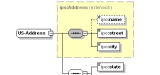
xml-schemaWe could rely on XML Schema for validation, but XML Schema can only validate so much.

Validating individual properties will probably work fine, but things get hairy when we want to validate relations between properties. For maximum flexibility, we’d like to use Java to express constraints.

More importantly, schema validation is generally not a good idea in a REST service.

A major goal of REST is to decouple client and server so that they can evolve separately.

If we validate against a schema, then a new client that sends a new property would break against an old server that doesn’t understand the new property. It’s usually better to silently ignore properties you don’t understand.

JAX-B does this right, and also the other way around: properties that are not sent by an old client end up as null. Consequently, the new server must be careful to handle null values properly.

Input Validation With Bean Validation

bean-validationIf we can’t use schema validation, then what about using JSR 303 Bean Validation?

Jersey supports Bean Validation by adding the jersey-bean-validation jar to your classpath.

There is an unofficial Maven plugin to add Bean Validation annotations to the JAX-B generated classes, but I’d rather use something better supported and that works with Gradle.

So let’s turn things around. We’ll handcraft our JavaBean and generate the XML Schema from the bean for documentation:

@XmlRootElement(name = "order")
public class Order {
  @XmlElement
  @Min(1)
  public int quantity;
}
@Path("orders")
public class OrdersResource {
  @POST
  @Consumes({ "application/xml", "application/json" })
  public void place(@Valid Order order) {
    // Jersey recognizes the @Valid annotation and
    // returns 400 when the JavaBean is not valid
  }
}

Any attempt to POST an order with a non-positive quantity will now give a 400 Bad Request status.

Now suppose we want to allow clients to change their pending orders. We’d use PATCH or PUT to update individual order properties, like quantity:

@Path("orders")
public class OrdersResource {
  @Path("{id}")
  @PUT
  @Consumes("application/x-www-form-urlencoded")
  public Order update(@PathParam("id") String id, 
      @Min(1) @FormParam("quantity") int quantity) {
    // ...
  }
}

We need to add the @Min annotation here too, which is duplication. To make this DRY, we can turn quantity into a class that is responsible for validation:

@Path("orders")
public class OrdersResource {
  @Path("{id}")
  @PUT
  @Consumes("application/x-www-form-urlencoded")
  public Order update(@PathParam("id") String id, 
      @FormParam("quantity")
      Quantity quantity) {
    // ...
  }
}
@XmlRootElement(name = "order")
public class Order {
  @XmlElement
  public Quantity quantity;
}
public class Quantity {
  private int value;

  public Quantity() { }

  public Quantity(String value) {
    try {
      setValue(Integer.parseInt(value));
    } catch (ValidationException e) {
      throw new IllegalArgumentException(e);
    }
  }

  public int getValue() {
    return value;
  }

  @XmlValue
  public void setValue(int value) 
      throws ValidationException {
    if (value < 1) {
      throw new ValidationException(
          "Quantity value must be positive, but is: " 
          + value);
    }
    this.value = value;
  }
}

We need a public no-arg constructor for JAX-B to be able to unmarshall the payload into a JavaBean and another constructor that takes a String for the @FormParam to work.

setValue() throws javax.xml.bind.ValidationException so that JAX-B will stop unmarshalling. However, Jersey returns a 500 Internal Server Error when it sees an exception.

We can fix that by mapping validation exceptions onto 400 status codes using an exception mapper. While we’re at it, let’s do the same for IllegalArgumentException:

@Provider
public class DefaultExceptionMapper 
    implements ExceptionMapper<Throwable> {

  @Override
  public Response toResponse(Throwable exception) {
    Throwable badRequestException 
        = getBadRequestException(exception);
    if (badRequestException != null) {
      return Response.status(Status.BAD_REQUEST)
          .entity(badRequestException.getMessage())
          .build();
    }
    if (exception instanceof WebApplicationException) {
      return ((WebApplicationException)exception)
          .getResponse();
    }
    return Response.serverError()
        .entity(exception.getMessage())
        .build();
  }

  private Throwable getBadRequestException(
      Throwable exception) {
    if (exception instanceof ValidationException) {
      return exception;
    }
    Throwable cause = exception.getCause();
    if (cause != null && cause != exception) {
      Throwable result = getBadRequestException(cause);
      if (result != null) {
        return result;
      }
    }
    if (exception instanceof IllegalArgumentException) {
      return exception;
    }
    if (exception instanceof BadRequestException) {
      return exception;
    }
    return null;
  }

}

Input Validation By Domain Objects

dddEven though the approach outlined above will work quite well for many applications, it is fundamentally flawed.

At first sight, proponents of Domain-Driven Design (DDD) might like the idea of creating the Quantity class.

But the Order and Quantity classes do not model domain concepts; they model REST representations. This distinction may be subtle, but it is important.

DDD deals with domain concepts, while REST deals with representations of those concepts. Domain concepts are discovered, but representations are designed and are subject to all kinds of trade-offs.

For instance, a collection REST resource may use paging to prevent sending too much data over the wire. Another REST resource may combine several domain concepts to make the client-server protocol less chatty.

A REST resource may even have no corresponding domain concept at all. For example, a POST may return 202 Accepted and point to a REST resource that represents the progress of an asynchronous transaction.

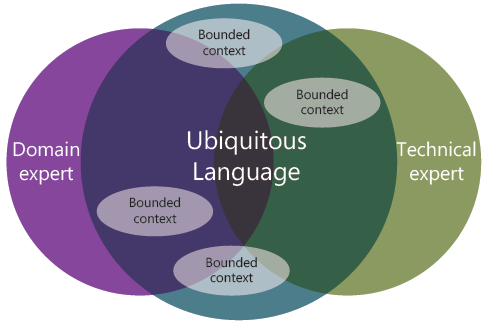
ubiquitous-languageDomain objects need to capture the ubiquitous language as closely as possible, and must be free from trade-offs to make the functionality work.

When designing REST resources, on the other hand, one needs to make trade-offs to meet non-functional requirements like performance, scalability, and evolvability.

That’s why I don’t think an approach like RESTful Objects will work. (For similar reasons, I don’t believe in Naked Objects for the UI.)

Adding validation to the JavaBeans that are our resource representations means that those beans now have two reasons to change, which is a clear violation of the Single Responsibility Principle.

We get a much cleaner architecture when we use JAX-B JavaBeans only for our REST representations and create separate domain objects that handle validation.

Putting validation in domain objects is what Dan Bergh Johnsson refers to as Domain-Driven Security.

cave-artIn this approach, primitive types are replaced with value objects. (Some people even argue against using any Strings at all.)

At first it may seem overkill to create a whole new class to hold a single integer, but I urge you to give it a try. You may find that getting rid of primitive obsession provides value even beyond validation.

What do you think?

How do you handle input validation in your RESTful services? What do you think of Domain-Driven Security? Please leave a comment.

Adventures in JavaScript: Objects and Prototypes

green-lanternLast time, I got started with JavaScript by doing the Roman Numerals kata.

I got the kata to work, but like all first steps, it felt awkward. The main reason is that JavaScript has a different object model than I’m used to.

Let’s suit up and shine some light on that model.

Objects

Things in JavaScript are either primitives or objects.

Objects can be created using literals:

var romanNumeral = {
  symbol: "i",
  value: 1
};

A new object can also be created by the new operator and a constructor. The constructor can refer to the newly created object with this:

function RomanNumeral(symbol, value) {
  this.symbol = symbol;
  this.value = value;
}

thingIn JavaScript, an object represents a table relating names to values.

The constructor above relates the name string to the object provided in the name parameter. (Let’s hope that object is actually a string.)

Name and value together are referred to as a property.

Values are things again, so either primitives or objects. Functions are objects too, as we’ll see below.

Here’s how someone with a Java background like me might initially try to code a JavaBean-like object:

function RomanNumeral(symbol, value) {
  this.symbol = symbol;
  this.value = value;

  this.getSymbol = function() {
    return this.symbol;
  };
  this.getValue = function() {
    return this.value;
  };
}

There are some problems with this piece of code, however.

Methods

daredevilThe first issue with the JavaBean-like code is that it’s built on the mistaken assumption that the symbol and value properties are private.

The properties of a JavaScript object are automatically exposed. Nobody is blind to your internals in JavaScript!

Luckily, JavaScript does provide a reliable mechanism for information hiding, namely the closure:

function RomanNumeral(symbol, value) {
  this.symbol = function() {
    return this.symbol;
  };
  this.value = function() {
    return value;
  };
}

Here the value of the symbol property is a function rather than a string. Functions in JavaScript are first-class citizens and can be passed around like any other object and then be called later.

Functions can refer to any variable in their scope, including the parameters and variables of outer functions.

So the closure assigned to the symbol property can refer to the symbol parameter provided to the constructor even when that parameter is out of scope at the place the closure is actually called!

Class Methods vs Instance Methods

The second problem with the initial code, and also with the improved code above, is that it creates new function objects and assigns them to the object’s properties every time an instance is created.

In the closure case, that is actually what we want, since the closure should have the constructor’s parameters in its scope for it to work properly.

In the original code, however, we end up with too many function objects. There will be one getSymbol function object per instance, for example. We can reduce that overhead by defining the function on the prototype:

function RomanNumeral(symbol, value) {
  this.symbol = symbol;
  this.value = value;
}

RomanNumeral.prototype.getSymbol = function() {
  return this.symbol;
};
RomanNumeral.prototype.getValue = function() {
  return this.value;
};

prototypeEvery object is associated with a prototype object. The prototype property is set automatically by the constructor.

With the above code, all objects created with new RomanNumeral(...) still have their own symbol property.

But now they all share the same instance of the getSymbol() function, because they access it through the prototype property that points to a separate object.

We can use the same trick with non-function properties too:

function RomanNumerals() {
  // ...
}

RomanNumerals.prototype.ROMAN_NUMERALS = [
  // ... other numerals ...
  new RomanNumeral("iv", "4"),
  new RomanNumeral("i", "1")
];

This is analogous to static variables in Java.

Subclasses

Let’s leave the Roman numerals behind and move into more interesting territory. Superheros have the ability to display their superpowers:

function SuperHero(name) {
  this.name = name;
}

SuperHero.prototype.showPowers = function() {
  beAwesome();
};

Some superheros can fly and therefore have an altitude:

function FlyingSuperHero(name) {
  SuperHero.call(name);
  this.altitude = 0;
}

FlyingSuperHero.prototype = Object.create(
    SuperHero.prototype);

FlyingSuperHero.prototype.flyTo = function(altitude) {
  this.altitude = altitude;
};

avengersHere we see some very powerful things at work.

First, a function is an object and can therefore have properties. The call() method is one such property.

Second, prototype is a property too, and can be set! We use this to create a new object with its prototype set to the object that represents the base class’ prototype.

Note that since objects are basically hash tables, we can’t simply override showPowers and call the super class’ version. There are some ways to achieve that, but they don’t look pretty.

This goes to show that you can’t force the Java model onto JavaScript without pain. To be successful in JavaScript, you must embrace its object model.

Reflection

It will probably take me a while to get used to JavaScript’s different object model.

spidermanI freaked out when I first realized that any code can change any property and that different instances of a “class” can have different methods.

Coming from a strongly typed world, that seems great power that is easy to abuse.

Better handle that superpower wisely!

Removing Deployment Friction With Push-To-Deploy

appengineAt work we use CloudFoundry as our PaaS, but I also like to keep informed about what other platforms do.

Google AppEngine Introduces Push-To-Deploy

Google AppEngine recently added an interesting feature: Push-to-Deploy through Git.

With Push-To-Deploy, you can simply push your code to a Git repository to get your code deployed on AppEngine.

This Git repository is maintained by Google and tied to your cloud account. I guess this is implemented using the post-receive Git server hook.

Push-To-Deploy Removes Friction

What I like about this feature is that it removes some friction from the deployment process: you no longer need to know about how to deploy your application on AppEngine.

Push-To-Deploy inches us closer to a Frictionless Development Environment (FDE). The two most likely candidates to become the FDE of choice both support Git, so it’s easy to use Push-To-Deploy in both Orion and Cloud9.

More Friction Remains

LubricationOf course, this is only a small step and a lot more work needs to be done before we really have an FDE.

In my ideal world, for any change that I make the FDE would automatically run the tests and code checkers in the background and, when successful, push the changes to a development branch to make them available for my co-workers.

To make this efficient, only tests that could potentially have been impacted by the changes would run, and they would run in parallel in the cloud. When specified criteria are matched, changes on the development branch would propagate to master and, using Push-To-Deploy, to production.

Although this is all far far away, every step is to be applauded, and I hope other PaaS providers will follow Google’s example.

What Do You Think?

Do you use Google AppEngine? Git? Would you use Push-To-Deploy? Would you like to see a similar feature in CloudFoundry or another PaaS?

Please leave a comment.

Adventures in JavaScript: Getting Started

Node.jsOne of the high potentials for a Frictionless Development Environment (FDE) is Cloud9.

It is one of a growing number of web applications that uses JavaScript as the programming language for both front-end and back-end. The latter brought to you by Node.js.

So I thought it was time to start playing around with JavaScript and Node. Here is an account of my very first adventure into this Brave New World.

Preparations: Adding JavaScript Support to Eclipse

To keep the number of changes low, I wanted to keep my trusted old Eclipse. So the first step was to install Nodeclipse and jshint-eclipse.

To support documentation in the Markdown format that Node uses, I installed the Markdown Editor plugin for Eclipse.

This left me with nothing for unit tests. So I installed the JavaScript tools from Eclipse. That gave me some JS support, but nothing for creating unit tests.

Some googling told me there is such a thing as JsUnit, the JS port of my beloved JUnit. Unfortunately it doesn’t seem to come with Eclipse support, even though this thread indicates it does (or did).

JsTestDriverMaybe I’m just doing it wrong. I’d appreciate any hints in the comments.

Some more googling informed me that Orion is using JsTestDriver.

This introduction to JsTestDriver explains in detail how it works.

First Exercise: Roman Numerals

Now that I’m all set up, it’s time to do a little exercise to get my feet wet. For this I picked the Roman Numerals kata.

I started out by following this JsTestDriver example. I created a new JavaScript project in Eclipse, added src/main/js and src/test/js folders, and created the JsTestDriver configuration file:

server: http://localhost:9876

load:
  - src/main/js/*.js
  - src/test/js/*.js

Next, I opened the JsTestDriver window using Window|Show View|Other|JavaScript|JsTestDriver and started the JsTestDriver server. I then opened the client in FireFox at http://127.0.0.1:42442/capture.

The next step was to create a new run configuration: Run|Run Configurations|JsTestDriver Test. I selected the project and the JsTestDriver configuration within the project, and checked Run on Every Save.

Now everything is set up to start the TDD cycle. First a test:

RomanNumeralsTest = TestCase("RomanNumeralsTest");

RomanNumeralsTest.prototype.testArabicToRoman
    = function() {
  var romanNumerals = new TestApp.RomanNumerals();

  assertEquals("i", romanNumerals.arabicToRoman(1));
};

And then the implementation:

TestApp = { };

TestApp.RomanNumerals = function() { };

TestApp.RomanNumerals.prototype.arabicToRoman
    = function (arabic) {
  return null;
};

I completed the rest of the kata as usual.

Reflections

The cool thing about JsTestDriver is that it automatically runs all the tests every time you change something. This shortens the feedback cycle and keeps you in the flow. For Java, InfiniTest does the same.

The problem with my current tool chain is that support for renaming is extremely limited. I got Operation unavailable on the current selection. Select a JavaScript project, source folder, resource, or a JavaScript file, or a non-readonly type, var, function, parameter, local variable, or type variable.

Other refactorings do exist, like Extract Local Variable and Extract Method, but they mess up the formatting. They also give errors, but then work when trying again.

All in all I feel satisfied with the first steps I’ve taken on this journey. I’m a little worried about the stability of the tools. I also realize I have a more to learn about JavaScript prototypes.

Bridging the Client-Server Divide

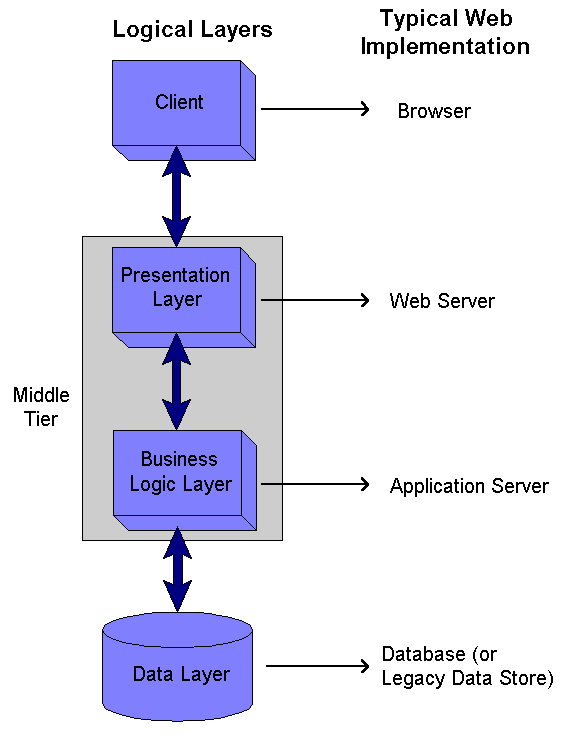
webapp-architectureMost software these days is delivered in the form of web applications, and the move towards cloud computing will only emphasize this trend.

Web apps consist of client and server parts, where the client part has been getting bigger lately to deliver a richer user experience.

This split has implications for developers, because the technologies used on the client and server parts are often different.

The client is ruled by HTML, CSS, and JavaScript, while the server is most often developed using JVM or .NET based languages like Java and C#.

Disadvantages of Different Client and Server Technologies

Developers of web applications risk becoming either specialists confined to a single part of the stack or polyglot programmers.

Polyglot programming is the practice of knowing and using many programming languages. There are both advantages and disadvantages associated with polyglot programming. I believe the overriding disadvantage is the context switching involved, which degrades productivity and opens the doors to extra bugs.

Being a specialist has advantages and disadvantages as well. A big disadvantage I see is the “us versus them”, or “not my problem” culture that can arise. In general, Agile teams prefer generalists.

Bringing Server Technologies to the Client

Many attempts have been made at bridging the gap between client and server. Most of these attempts were about bringing server-side technologies to the client.

GWTJava on the client has failed to reached widespread adoption, and now that many people advice to disable Java applets altogether because of security reasons it seems increasingly unlikely that it ever will.

Bringing .NET to the client has likewise failed as Silverlight adoption continues to drop.

Another idea is to translate from server to client technologies. Many languages can now be compiled to JavaScript. The most mature effort is Google Web Toolkit (GWT), which translates from Java. The main problem with GWT is that it supports only a small subset of Java.

All in all I don’t feel there currently is a satisfactory way of using server technologies on the client.

Bringing Client Technologies to the Server

So what about the reverse? There is really only one client-side technology worth looking at today: JavaScript. The only other rival, Flash, is losing out quickly due to lack of support from Apple and the rise of HTML5.

Node.jsJavaScript on the server is starting to make inroads, thanks to the Node.js platform.

It is used by the Cloud9 IDE, for example, and supported by Platform-as-a-Service providers like CloudFoundry and Heroku.

What do you think?

If I had to put my money on any unification approach, it would be Node.js.

Do you agree? What needs to happen to make this a common way of developing web apps? Please let me know your thoughts in the comments.

Data Classification In the Cloud

Whenever a bug report comes in, I subconsciously classify it according to how it impacts the customer’s ability to derive value from the product.

Many software development companies have policies that formalize such classifications, e.g. into critical, high, medium, and low priority.

One can take that very far, like the Common Weakness Scoring System (CWSS) for classifying security vulnerabilities.

Data classification

Classifications are useful, because they compress a vast set of possibilities into a small set of categories. This makes it easier to decide what to do.

Classification applied to data stored in computer systems is called data classification. There are different reasons for classifying data.

One is to determine appropriate access control policies. It is wasteful to protect all your information at the highest level, so you want to divide up your data into a small number of buckets and take measures that are appropriate for each bucket.

Another important use case of data classification is to drive compliance efforts. If you process health care data, for instance, you may have to comply with the Health Insurance Portability and Accountability Act (HIPAA). This data requires different controls to be put in place than credit card data that is covered by PCI DSS.

Data in the Cloud

Things get more interesting in the cloud.

As a cloud user, you are still subject to the same laws and regulations as before, but now you’ve given away part of the control to your cloud provider. This means you have to make sure that they implement the required controls.

If the regulations you must comply with come with assessments, then those must extend to the cloud provider. Many cloud providers will not allow you to come in and do such assessments yourself, but they may allow assessments from third parties, like TRUSTe for a Safe Harbor assessment.

As a cloud provider, you will want to implement as many controls as possible, to support the maximum number of laws and regulations that your customers must comply with.

Both parties benefit from clear contracts. Part of such a contract may be a Data Protection Agreement that lists the duties of both parties in classifying and properly protecting data to meet security requirements and regulations.

If you’re unsure how to do all of this right, then you may want to look for guidance from the Cloud Security Alliance (CSA).

Likely Candidates for Frictionless Development Environments

Last time I reviewed the book on Consumption Economics, which explains how technology companies and their products will have to change to survive the brave new world that we’re entering.

So what would we find if we take the lessons from the book and apply them to our own software development environment? I think the answer would be surprisingly close to what I’ve called a Frictionless Development Environment (FDE) before.

To be honest, I’ve only started thinking more systematically about FDEs after reading Consumption Economics. In Five Essential Components of a Frictionless Development Environment, I’ve laid out the major building blocks of an FDE: cloud computing, big data analytics, recommendation engines, plug-in architecture, and open source.

It may be to soon to expect existing solutions to have all of those, but let’s see where we stand. There are already some cloud development environments. Most of these are geared towards web developers, and offer limited languages (mostly JavaScript). Some offer a big enough range to be interesting to a wide range of developers.

Big data analytics and recommendation engines are big features that are probably not there yet, but could always be added later. What’s more important is to look for a plug-in architecture and particularly for open source. These are fundamental architectural and business decisions.

Using open source as a criterion reduces our list to Cloud9 and Orion. Both have a plug-in architecture. The latter is an Eclipse project, but the former seems more mature. Be sure to follow both Cloud9 and Orion.

So what do you think? Would any of these cloud IDEs work for you? What other open source cloud IDEs are out there?